The Theatre of Dionysus Eleuthereus
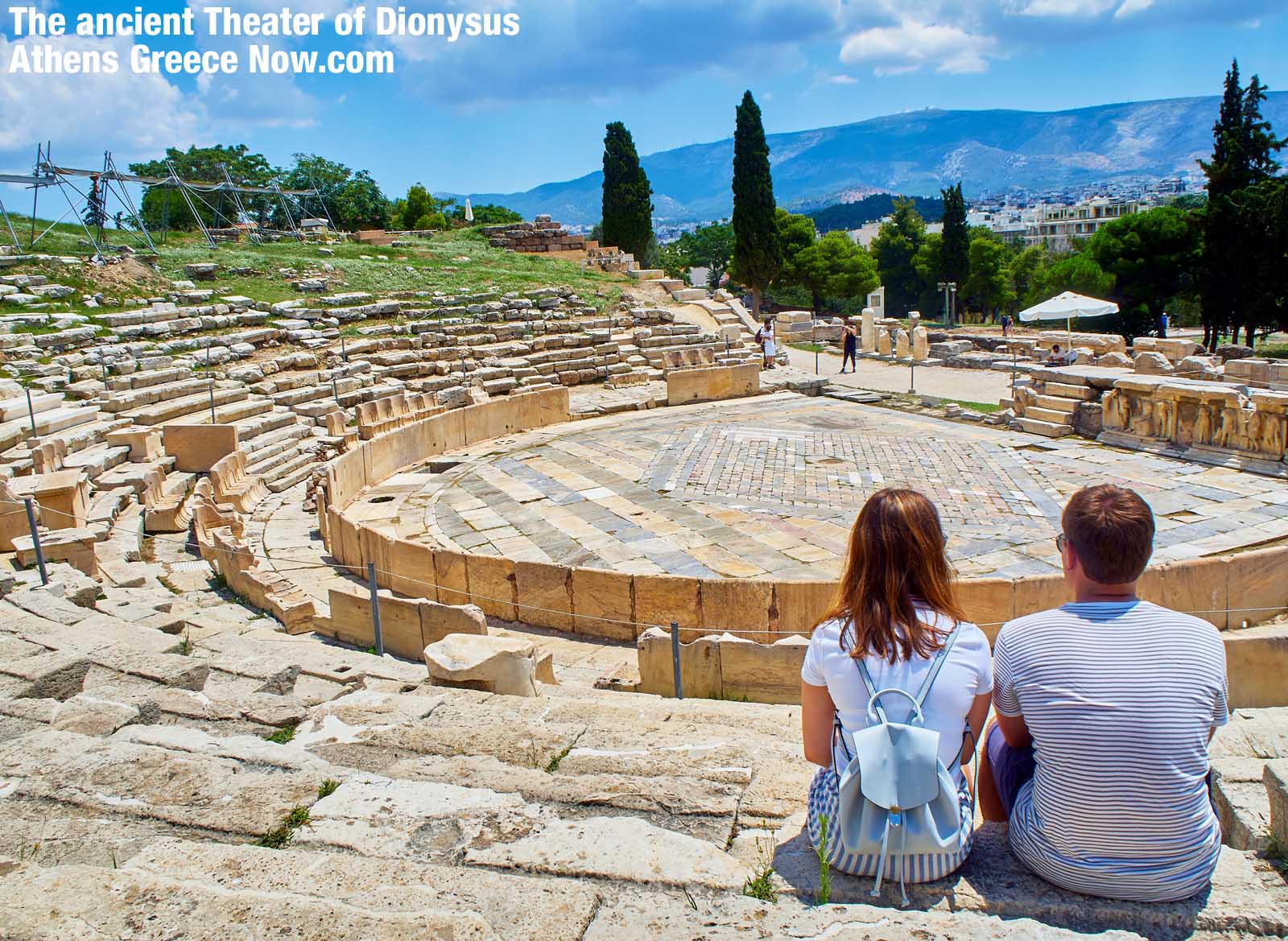
The Southern Slope of the Acropolis - Dionysos Theater
Archeological evidence shows that human beings were using the southern slope area in the Neolithic period (i.e., the "stone age"), and the slope was particularly prized as a place where fresh water was available. By the 6th century BC, the area was considered a sacred place dedicated to the gods and beings of the classic Greek era religions. The flat top of the Acropolis became the home of the temples and religious buildings for the performance of those faiths and their rituals.
The amphitheater of Dionysos (also spelled Dionysus) was the original home of "Greek Tragedy" and was where plays by Aeschylus, Sophocles, Euripides and Aristophanes were performed for the first time. The Dionysos theater was re-constructed on the eastern slide of the slope in 342-326 BC in stone, the original theater being made presumably from wood and earth. Later expansion by the Romans made the theater capacity go to some 17,000 seats, and the theater was used for gladiatorial events.
Ancient theaters of Greece
The Southern Slope of the Acropolis - The Dionysos Theater
Odeon Herodes Atticus in Athens
Odeon Theatre in Patras, Greece
GREECE TRAVEL GUIDE FOR SENIORS 2026-2027 – AMAZON 128 Pages
ADVERTISEMENT
Guide Book for the Peloponnese: with Athens, Delphi and Kythira – Paperback – Amazon – Bradt Travel Guides, 288 Pages, November 18, 2025
Weapons, Warriors and Battles of Ancient Greece and Rome - 400 Pages – AMAZON
A comprehensive, accessible study of Greek, Macedonian, and Roman weapons, armour, and military systems. Publisher: Pen and Sword Military

Greece's Golden Visa program
Advertisement: I am an Amazon affiliate
Fodor's Essential Greece: with the Best of the Islands (Full-color Travel Guide) – Amazon
- Illustrated experiences guide to the top things to see and do
- Multiple itineraries to help organize your days
- 40+ detailed maps for easy navigation
- Color photos throughout
- Local recommendations for sights, dining, hotels, nightlife, shopping, and activities
- “Best of” features covering beaches, food and drink, and more
- Trip-planning tips on when to go, getting around, avoiding crowds, and saving money
- Historical and cultural insights into Greek people, art, architecture, and cuisine
- Special features on the Acropolis, Greek gods and heroes, Greek history, Meteora, and more
- Local writers highlighting lesser-known places
- Greek-language primer with useful words and phrases
- Up-to-date coverage of Athens, Santorini, Mykonos, Crete, Corfu, Rhodes, the Aegean, Sporades and Saronic islands, Delphi, Central Macedonia, Meteora, and the Peloponnese
- 800 Pages